Team USA’s Proven Travel Tips
Members of the elite dog agility Team USA, flying to Valencia, Spain, to represent the United States Dog Agility Association® at the 2026 IFCS World Agility Championship, will use strategic dog agility travel tips to ease their dogs’ journey and optimize their performance. This article can be used as a guide for traveling with dogs for international agility competitions.
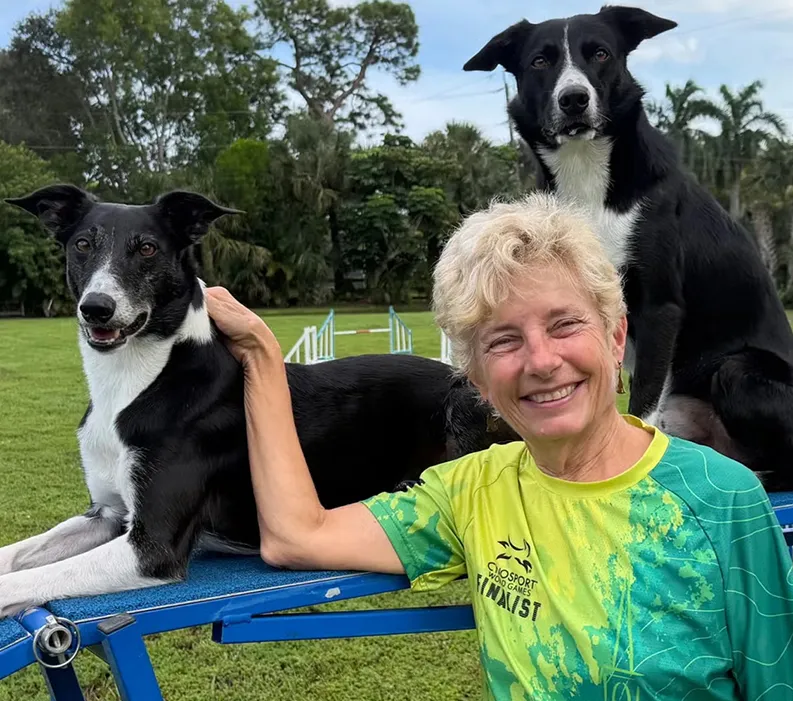
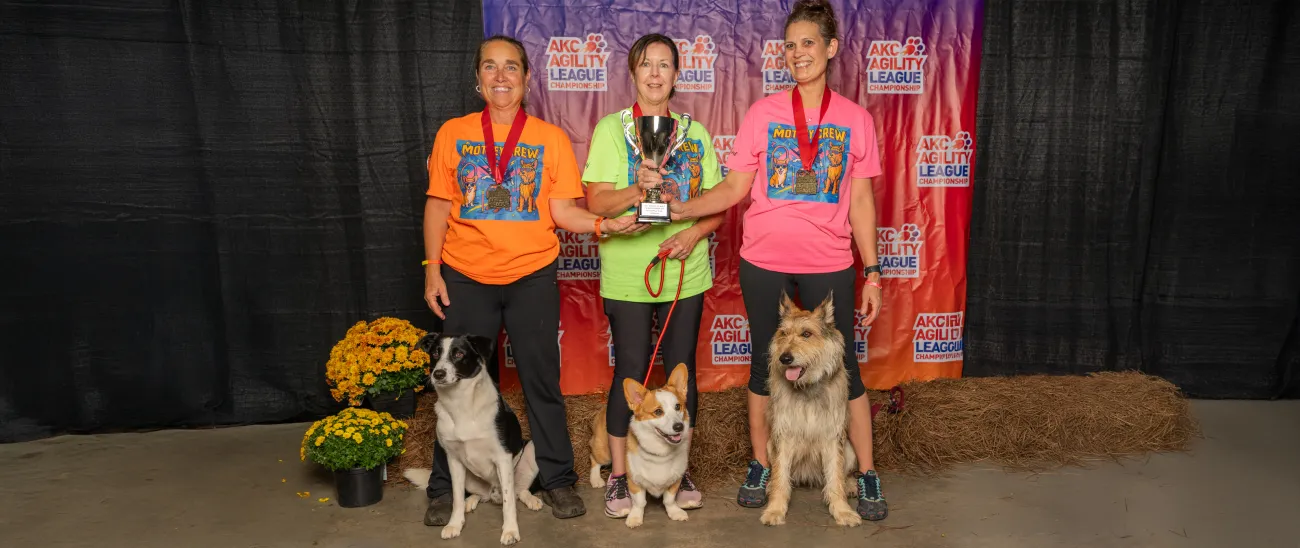
Danielle Scott of Charleston, South Carolina, Reese Spindle of Severn, Maryland, and Karena Kosco of Poway, California, share their hard-earned dog agility travel tips gleaned over years of going to competitions. They aim to help their dogs rebound from the 10-hours-plus international flight and to settle in at their destination so they can focus on the sport. Canine rest and recovery are the crux of their success in these demanding international dog agility competitions.
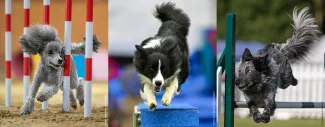
Danielle and Reese will tap into lessons learned from two previous trips to the WAC. Danielle and her 7-year-old male Border Collie, Iron Man (ADCH MACH IAC4 IWAC3 Sagehill Spot On 3rd Rock From The Sun! MXS PAD MJS PJD MXF T2B2), were on the teams that went to the United Kingdom in 2023 and to France in 2024.
Reese and her 4½-year-old female Miniature Poodle, Havana (Safranne’s Doña Havana De La Vega MX MXJ OF DCAT TKN), went to France in 2024 and Switzerland in 2025. A newcomer to international dog agility competition, Karena and her 4-year-old male Border Collie, Ronan (Spritzig Waltzing Lunar Eclipse AX AXJ), will apply insights from their domestic dog travel routine.
“On the road, I try to keep Iron Man’s routine as consistent, predictable and repeatable as possible,” Danielle says. “Dogs thrive on that predictability. The more normal I can make an abnormal environment, the better he performs.” This consistency is vital for proper dog travel recovery.
Establishing an effective dog travel routine begins in puppyhood, these experts say. This is a foundational step in agility event preparation.
“I take my puppies on short, low-pressure outings that involve car rides, crating them away from home at agility trials and spending time in new environments,” Karena says. “I focus on making the travel routine stress-free. Over time, travel becomes a normal part of life.”
Relationship building is an inherent part of teaching a dog to resist distractions. “By the time we get to a competition venue, I have worked on building a relationship with my dog via short, consistent routine experiences where he is engaged with me regardless (of) what’s going on in the environment,” says Danielle, highlighting the importance of connection for agility event preparation.
Essential Dog Flight Tips and International Travel Logistics
Booking an international flight for dog agility competition requires careful considerations of travel time,” Reese reflects, offering key dog flight tips. “If you take a morning flight, your dog has gone all night without eating or drinking, which makes it easy to potty them and get them on the plane. It gets tricky with an evening flight.
“My rule of thumb is not to feed within eight hours of a departure. This helps avoid bloating, indigestion and fatigue caused by the body’s inability to properly digest food at high altitudes. Cabin pressure slows digestion, while fasting reduces jet lag and prevents discomfort from gas expansion in the stomach. I also keep a few spare meals in my carry-on, so I can feed Havana as soon as I’m able to potty her outside after landing. She gets her second meal around her dinnertime in the new time zone.” These are critical tips for dogs to achieve optimal recovery after air travel.
Danielle and Iron Man plan to start adjusting beforehand to the time difference.
“Even before we leave, I’ll start gradually changing our days and nights to be more in line with the circadian rhythm of the new time zone,” she says, highlighting a crucial part of agility event preparation. “The idea is to try to make the difference not as great by adjusting feeding, exercise and sleep times.”
Another hack Danielle uses when flying with dogs “is getting Iron Man used to the sounds he will experience while being crated in a plane by playing YouTube® videos of planes landing and taking off.”
Reese realized before her first international trip that Havana was anxious about rolling suitcases. She overcame her Mini Poodle’s fear by “taking a rolling bag and walking her on leash at the airport. I rewarded her for focusing on me,” she says.
Related to rolling luggage, Karena says, “You can buy a small plastic platform furniture dolly with four wheels that makes it easier to move a crate around the airport.”
Danielle addresses her concerns about Iron Man flying in the pet hold of the plane’s rear cargo by using Apple® AirTags®. “I tape an AirTag on the bottom of his crate and on his collar, so I know when he is loaded on the plane,” she says. “AirTags transmit to my phone on the Find My network.”
Packing hacks for Karena include “putting a lightweight, twistable travel crate in my large suitcase to use at the agility venue, which allows me to keep Ronan’s plastic airline crate in the car. I also bring two heavy-duty bungee cords to secure the crate in the rental car,” she says.
“Rest and recovery are a top priority for a trip of this duration and travel time,” Karena adds. “You have to allow time to adjust to the time change, environment and climate. During that time, I’ll prioritize plenty of downtime.” This downtime is essential for dog travel recovery.
Optimizing Agility Dog Nutrition and Hydration for Travel
Feeding a quality performance dog food is the foundation of optimal performance and recovery. Dehydration can occur after multiple days of travel combined with competition.
“Nutrition and hydration both are key,” Reese says. “If dogs don’t get the right level of protein and fat, they can’t recover right away. Protein helps keep them fueled, and fat is important for the recovery of muscles. It’s important to have a good balance. I also weigh Havana weekly and monitor her body condition.”
Skipping meals is not a consideration.
“Nutrition consistency is one of the most important recovery tools we have,” Danielle says. “Just like at home, I feed two meals a day at competitions, and I try to keep them as close to the time of our routine as is possible.”
Proper dog hydration for travel entails “making sure Iron Man has plenty of access to water,” she says. “If I notice he is acting like he wants to drink or his water intake is lower, I will put an electrolyte supplement in the water to encourage him to drink. Coconut water works, too, because it contains electrolytes.”
Ensuring proper dog hydration during travel for Ronan, who does not drink readily when crated in the car en route to a destination after flying, Karena says, “I try to feed him right away after flying, and I make sure his meal is a bit ‘soupier’ to provide extra water.”
Canine Rest and Recovery: Strategies for Performance Dog Recovery at Competitions
Performance dog recovery should be planned, and dogs should be taught to adapt mentally and physically to travel and competition, which can compromise immune function. Warm-ups, cool-downs, massages and rest can help promote canine recovery. This is a critical component of agility event preparation.
“One important thing I have added in the past couple of years is Pro Plan® FortiFlora® (Pro Plan Veterinary Supplements FortiFlora Canine Health Supplement),” says Karena. “I add it to Ronan’s food starting a few days before we travel and continue using it throughout the event. FortiFlora helps with intestinal health balance and supports immune health.”
“On competition day, I prioritize Iron Man’s downtime via crate rest and making sure he gets structured warm-ups and cool-downs, decompression walks, massages, and mobility and body awareness exercises,” Danielle says. “Warm-ups and cool-downs provide another layer of routine that is predictable and repeatable, so dogs know what they are doing and nothing is a surprise.
“Pre-run warm-up exercises include range-of-motion stretches and dynamic warm-up to improve blood flow and reduce the risk of injury, and our post-run cool-down routine is comprised of walking out and static exercises that involve holding different stretches for several seconds to aid recovery and reduce stiffness.” These practices are vital for performance dog recovery.
Reese agrees. “I make sure Havana is fully warmed up by doing 5 to 6 minutes of some sort of stretching exercise like play bows, left and right spins, backing up, and sits, downs and stands,” she says. “It’s also important to include a 5- to 15-minute walk prior to pre-run stretches to boost blood flow and loosen the joints to prevent injury.”
All agree a good night’s rest is imperative.
“I try to limit Ronan’s mental stimulation at night to help him settle,” Karena says. “Calming chews with melatonin or the essential amino acid tryptophan aid in his sleep quality and are also helpful for the flight.”
Ultimately, Danielle says, “Everything with dogs is about a solid routine. The goal is to try and make it so our dogs are prepared for anything.”