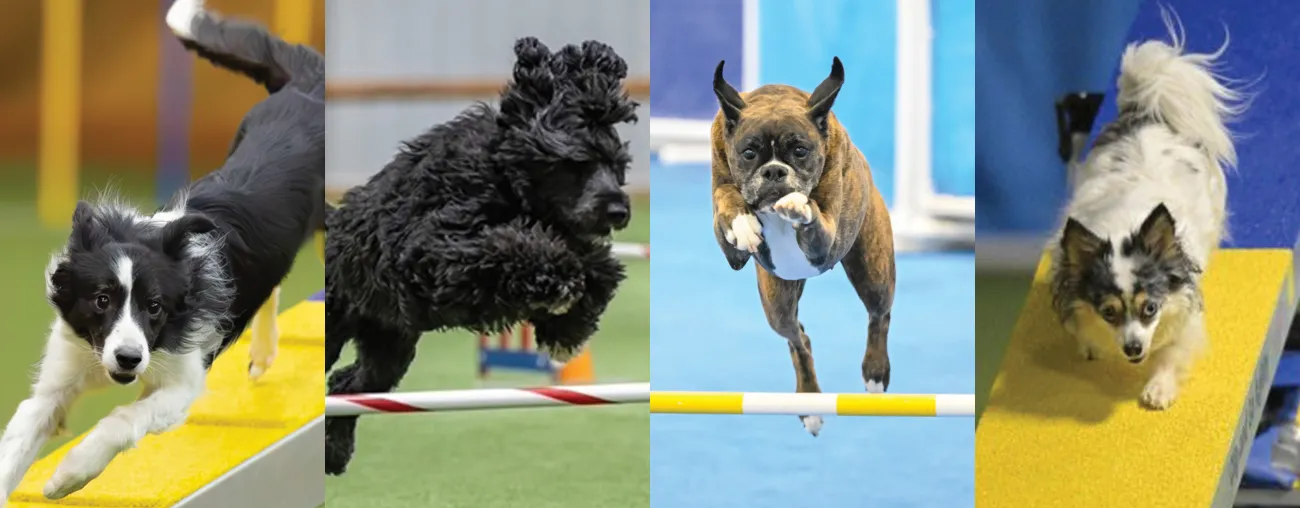
Toys, food and praise are the secrets to successful agility dog training, according to trainers who use positive reinforcement to help owners and their dogs gain confidence to mastering challenging skills and building a powerful working relationship.
“Positive reinforcement is an effective way of training your dog with the added benefit of building the bond you share with your dog,” says Weronika Evans, who runs Positive Pheelosophy agility training at Crystal Creek Farms in Woodinville, Washington.
Rewarding desired behaviors immediately after a dog performs them is key to helping them learn. As dogs train on contact obstacles, jumps and weave poles, positive reinforcement motivates them and increases the likelihood they will repeat a new skill.
“Dogs are particularly responsive to positive emotions and are more likely to explore something the owner is excited about,” says Purina scientist Annie Valuska, PhD, CAAB, a certified applied animal behaviorist. “The way owners express themselves, their facial responses, the words they use and the tone of their voice can drive dogs’ behavior.
“Communication with our dogs is an essential part of the human-animal bond. It is influenced by behaviors that are essential to the mental, physical and social health and well-being of both the dog and owner. In other words, it is a relationship that benefits both ends of the leash.”
“The goal is to figure out how to have a happy dog without stress in the ring,” Weronika says. “It helps when owners have a happy, supportive attitude.”
“Positive reinforcement is about training in a fun way that you can keep building on using positive energy,” says Lori A. Wassmer, owner of PoCo Pawcademy in Poseyville, Indiana. “Positive reinforcement rubs off on people, too.
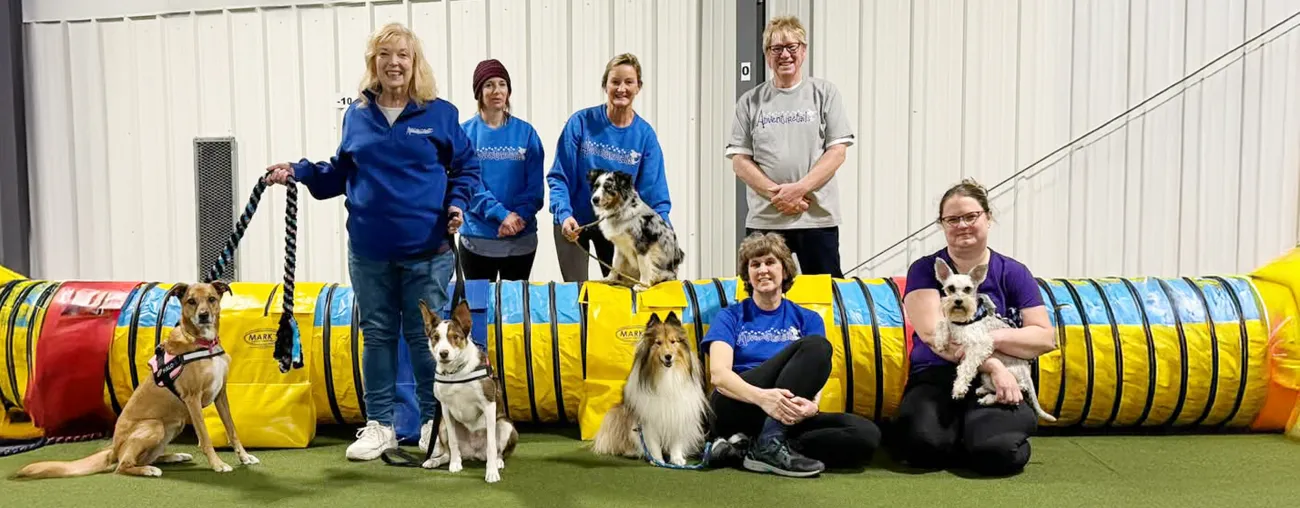
“In Agility League, we know what one another struggles with, such as a specific turn or a particular jump. If a dog or a person achieves something they’ve been working on, we point it out. By being encouraging and positive, we help one another.”
In contrast to positive training, “You can’t be aversive and expect a dog to do well,” says Pam Hancock, a trainer at PoCo Pawcademy. “Negative markers, such as yelling, popping and jerking forcefully, spraying water in a dog’s face and corrective collars, make a dog fearful. They don’t want to be wrong, but they often don’t understand the desired behavior.”
“Breaking things down so dogs are less fearful is helpful,” Weronika says. “A dog, especially a small dog, might be afraid to go over the A-frame or across the dog walk. We reward the dog each step along the way. Training goes much faster.”
Pam agrees, when describing how to agility train a dog with positive methods: “We use treats as a magnet to get a dog to respond to certain activities like going around a cone or going forward,” she says. “We make sure not to say, ‘no,’ in training. It does not help to use a negative marker.”
“Dogs have better and stronger responses to positive stimuli than negative stimuli.”
– Purina scientist Annie Valuska, PhD, CAAB
Ultimately, all agree that dogs learn best when they are enjoying themselves and are rewarded for their work. Positive reinforcement builds a dog’s confidence and strengthens the bond with the handlers. Importantly, it is a powerful tool in agility training that can help a dog reach his potential.